Monday, April 28, 2014

Steps to Evangelizing - be an Honest Christian instead of a Lying Hypocrite 

The world is an interesting place.  It is filled with souls that yearn for God, yet constantly stuff finite objects into an infinite hole in their heart.  They subconsciously yearn for God's love, yet don't know where to find it.  It will even seem that when you suggest the possibility of God, they shut down.

How do we lead others to Christ without burning down our friendships with non believers?  There are many countless ways, but this post will focus on two.

Point number one: Befriend them.  You cannot suggest fixes to problems you don't understand all aspects of.  If you have a classmate who is constantly bashing the Catholic faith, don't go Rambo on them and demand they respect the Church.  Get to know them.  More than likely, you have some form of concern for this person's soul, or else you just wouldn't care, frankly.  So, if you get to know this person as a child of God.  There is something broken in every soul that is the cause of a hatred or lashing out or general life of dependency of sin.  But you cannot pass judgement on a person at all.  You can judge their sins as harmful to the life of their soul and to their relationship with God, though.  Yet it is easier to understand the behavior when you understand the environment.

The blatantly homosexual guy at work?  Could have been abused by his dad as a child.  The girl who constantly snaps at you everyday in your grocery line?  Maybe her boyfriend recently broke up with her and she just feels like a pile of trash.  Each of these people is loved by their divine creator, who just wants them to choose Heaven and Him.  They won't choose Heaven and Christ if the only example of a Christian just constantly tells them how much they are sinning.

Point number two:  Make sure you have what you're trying to give away.  If you walked up to your classmates and said, "Hey guys!  Doughnut day!  Doughnuts for everyone!" then they would probably get pretty excited.  I mean, it's free food, it's college, it's common sense.  But if you then said, "But I don't have the doughnuts!  Don't look at me!  Go get them yourself!"  they would probably sigh, shake their heads, and, depending on if it's finals week or not, chase you out of the classroom with torches and pitch forks


But if that's the reactions to food, imagine what the reaction is to the claim that you know the Bread of Life.  If you preach Christianity to people in your life, but your life says the opposite, don't expect to win souls.

To claim solidarity with the Christian life, but then act hypocritical turns SO many people away.  If you say Catholics should act like Catholics, but use contraception in your sexual activity, your life is a contradiction.  And people see that.  And then they don't listen to your defense of the faith because you're already justifying your own sins.  


So, basically, be a good friend and be a holy Christian.  It's the Easter season.  It's time for a fresh start.  It's time to turn our whole lives over to the Lord.  Not just the parts we want to give Him....give Him your all.  I've heard He runs a pretty decent return rate.

God bless,

Chloe M. 


Sunday, March 30, 2014


Saying "No" to Noah


Lately there have been quite a bit of big-hit movies that have Christian themes.  October Baby (my favorite), Son of God, The Bible mini-series, the upcoming Moses film and, of course, this weekend's biggest hit, "Noah."  


Yet unlike the above mentioned films, "Noah"does not strive to uphold Christian principles or promote the classic Bible story.  Instead, the falsities construed in the film are a slap in the face to Christians attending the film.

How is this so?  Let me count the ways:

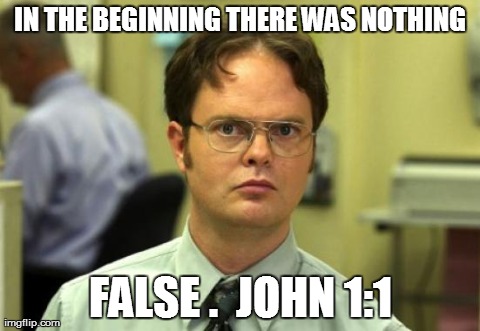
 The beginning line of the film is
"In the beginning there was nothing."


It seems to be that the directors of the film also thought
that the greatest sin of all mankind was destroying the earth.  Instead of focusing on what we really know what was going on that was bad enough for God to want to start
the world from scratch again, they focus heavily on an blatant environmentalist principles.

Spoiler Alert: In this way, the film doesn't have to mention God.  Ever.


The movie also goes to extremes to create an impression that Noah just hates people.  Period.
There are a couple of instances that prove this point.
When his son's girlfriend is kidnapped by thugs, Noah
leaves her in their hands to die.
At the most shockingly false part of the film, Noah also is seen plotting to kill his unborn grandchild if it turns out to be a girl.

 So instead of the film being about how God is recreating the earth with the betterment of His children in mind, we are left with a film that describes Noah, a man anxious to just be done with the human race.  Even his own family.

Kevin Ham, the President of Answers in Genisus, who recently
debated Bill Nye the Science Guy on creation, had this to say
about the film:

"“Noah” is an insult to Bible-believing Christians, an insult to the character of Noah, and most of all, an insult to the God of the Bible. As a result, I believe Hollywood will have a much harder time in marketing future biblically themed movies to Christians."

This film earns a zero in my grade book.  What are your thoughts on the subject of Biblical films, or so called "Biblical" films?  I'd love to know!  Comment below!


God Bless!

Chloe M. 


Thursday, March 20, 2014

The Struggle

It appears impossible at times.  A seemingly impossible task in a world splattered with sin and pain.  Yet the desire to pursue purity is a noble struggle indeed. 

As much as desire to, I cannot tell you that this struggle will get easier.  Or if it will even get better.  More socially acceptable.  However, I can tell you that it is worth it.  For, in the end, it is the issues that you have poured the most sweat, tears and blood into that will be the most valuable to you.

Concerning physical purity, there are things you can do to alleviate some difficulties.

The first is to avoid occasions that you know are tripping points for you.  Keep in mind that these are incredibly personal.  Stumbling blocks are as unique as you are.  What may cause you to slip and fall could be an unnoticeable pebble in the road for others.  If a recovering drug addict knows that a certain house would be conducive to regression, he should by all means avoid that house.  So to, the child of God struggling to remain pure should avoid occasions of sin specific to the vice.  That could mean not going over to a boy's house when you know that you two will be the only ones there.  That could mean closing down electronic devices when you are the only one there to keep tabs on yourself.  It could mean avoiding certain movies and music.  Yet these situations can only be identified you. 

Don't be afraid to use a two letter word that it seems we avoid more and more these days: "No."  True, it may be awkward when you have to tell your friends that you aren't going to go see that movie.  It may create some moments of silence when you tell the person you like that you can't come over, as much as every fiber of your very being is begging you to say yes.  Brian Kissinger said, "It’s better to be awkward and avoid sin than to fall into sin because we’re afraid of looking or seeming weird." 

Take advantage of Lent.  It is through Lent that we deny ourselves small things as a practice field of denying ourselves the sinful desires offered to us by this world.  So while not drinking coffee during the week may give you a HUGE caffeine headache (I know by experience that it does!), think of it as training to say no to something bigger when it comes. 

Build up strong walls.  Not physically.  That would be weird.  No - with people.  Surround yourself with those who are in the same mindset as you are.  A goal is more attainable when you know people are going to ask you about it.  If you want to run a 5K, but you don't ask anyone for tips or tell them about your goal, how easy will it be to give up on that goal?  The only person you are disappointing is yourself.  But if you tell lots of people about it and train with them, the less likely you are to give up on your goal.  Even if it's just asking someone to text you once a week and ask you how God is working in your life, you're much better off than trying to ride the struggle bus solo.  Not to be a Debbie Downer, but the road to Hell is paved with good intentions.

The struggle is real....but so is the success.  You can do this.  I believe in you... and more importantly, so does God.


Chloe M.

Monday, February 17, 2014

Catholic On Campus

Ah, college.  The time of life where we dedicate hours to studying, reading, and banging our head against the wall in frustration.  When a majority of our budget goes to tuition, books, and a ridiculous amount of coffee.  In the midst of this crazy time, we also may have to encounter face-to-face anti-Catholic bias from our teachers, friends, family or roommates.  How do we deal with these issues?  While each incident most definitely requires it's own judgement, I've decided to present the Catholic counter to many questions you may be asked during your time on campus (and even after graduation!)

The first topic.....Priestly Celibacy.


This is a big one.  I've been on a college campus and have run across this topic quite a bit.  Unfortunately, it's usually brought up as a last resort from people making an anti-Catholic argument - a final stab, if you will, concerning the celibacy of priests.  This has become increasingly popular due to the sex abuse scandals (particularly those involving minors) in the Church.  Let's take a look at the basics of priestly celibacy in order to establish a good foundation.


Point One: Priestly Celibacy is not a dogma or doctrine of the Church

If the person you are discussing this subject with knows their Bible, they will inevitably direct you to Mark 1:30, which says, "Simon's mother-in-law was in bed with a fever, and they immediately told Jesus about her."  Following a logical thought process, one can assume that you can't really have a mother-in-law sans a wife.  Your questioner may also point out that since Peter was married, he couldn't have been the first pope, or that Catholics invented the idea of a celibate priesthood, and the concept isn't biblical.  

It is here that you can shock their socks off by telling them that celibacy is not the norm for a lot of Catholic priests.  For instance, Eastern rite Catholic priests are typically married, as well as those in the Orthodox and Oriental. Granted, there are restrictions, such as if one is married upon ordination, following the death of one's wife, remarriage is not allowed.  Also, Eastern bishops are not allowed to be married.

So where did this practice come from?  Priests and bishops have taken a vow of celibacy in the Western and Latin Church since the middle ages. Yet even here there are exceptions - someone who is a Lutheran minister who converts to Catholicism and is ordained a priest can still be married.  

Moral of point one: Priests taking a vow of celibacy is not a concrete dogmatic practice of the Church.  Rather, it is a disciplinary rule practiced by members of the Church.  

Point Two: Priests do not take a vow of celibacy because they believe sex is bad.

No one gives up something they do not desire.  A prime example of this is found during Lent.  When your little brother tells you he decided to give up peanut butter for Lent, and you know that he hates peanut butter, you have to smile at his "sacrifice."  It's like giving up homework for Lent.  Big deal.  

The real sacrifice comes when you give up something you want.  So, if I was to give up coffee for Lent, it would be a struggle (and you probably would only want to talk to me on Sundays).  So, for a priest to take a vow of celibacy does not mean that he thinks sex is bad.  Rather, he is directly saying with the action of this vow, "Sex is a beautiful gift of God.  Marriage is a beautiful way in which humans are able to interact with God in concern to bonding and procreation."  The act of sacrificing this ability to interact physically with other humans and with God in the procreation of the soul in fact points to the glorious gift of sex and marriage in the Christian life.  

Point Three: Celibacy isn't only for priests.

While we most commonly think of priests or other religious who have taken a vow of chastity when we said the word "celibate," the term actually applies to a lot more people than we realize.  If you are unmarried, you are called to be celibate.  The Catholic Church recognizes that the only place for sex is marriage between a man and a woman.  So if you are a priest, you shouldn't be having sex.  If you are a single, you shouldn't be having sex.  If you are divorced sans annulment, you shouldn't be having sex.  People are called to chastity - regardless of their vocation. Ultimately, sex is a marital blessing, not a free-for-all-whenever-you-feel-like-it activity.  

Point Four: Priests who sin does not a Catholic Church ruin

Catholicism is not defined by a handful of men who do not understand what it means to be a priest.  The Church in no way ever glorifies or celebrates the decision that a vowed priest has made to break his vow of chastity with anyone.  There have been examples in the Church of attempts to cover up or ignore obvious issues of abuse (either of minors or adults).  In no way is this practice condoned by The Church as a whole.  To prove this point, Pope Francis has recently spoken out concerning the sex abuse scandal in the Church, and has formed a committee to discuss how to deal with post-abuse victims, how to better screen for seminary, keep up on priests with issues and provide support to the Church.  

Point Five: It's not just Catholic Priests.
Catholic clergy aren't more likely to abuse children than other clergy or men in general.
 According to the best available data (which is pretty good, mostly coming from a comprehensive report by the John Jay College of Criminal Justice in 2004, as well as several other studies), 4 percent of Catholic priests in the USA sexually victimized minors during the past half century. No evidence has been published at this time that states that this number is higher than clergy from other religious traditions. The 4 percent figure is lower than school teachers (at 5 percent) during the same time frame and perhaps as much as half of the numbers of the general population of men. (Do the Right Thing, psychologytoday.com, March 24, 2010)  

Point Six: It's about anticipation of a sweeter song.

Catholic celibate priesthood is an incredible way of anticipation of the Kingdom of Heaven. Matthew 22:30 says "For in the resurrection, they neither marry nor are given in marriage, but are like angels in Heaven."   While marriage here on earth gives humans a taste of what Heaven will be like and an incredible opportunity to interact with God in the creation of another soul, it is just that - a taste.  Heaven is a complete adoration and giving to God out of complete trust.  When people who are married go to Heaven, they have a vocational change - their marriage was able to bring them closer to Heaven, and now that goal has been reached.  But when those who have pledged their earthly lives to God reach the goal of Heaven, they have the easiest transition of all - they have been practicing for this their entire lives!


Hopefully this helps give a basic knowledge for the case of defense for the Catholic position of priestly celibacy.  If you have any questions, situations where you have had to defend this subject that you'd like to share, or other thoughts, please post so in the comments below!

God bless!

Chloe M. 

Sunday, February 16, 2014

"See anything, old chap?"
In Search of "Fairness"


One of my all time favorite parables in the Gospels is found in Matthew chapter 20.  In it's simplest form, the story basically runs as such:  There is a man who owns a vineyard, which is in need of labor.  He goes out to find workers in the early morning.  Some people agree to work, and after settling on a wage they both agree on, they head into the fields.  The work continues to be in need of laborers, so the owner goes out multiple times during the day to hire more people.  At the end of the day, he pays everyone.  The morning workers began to become agitated because those who worked less time still got the same monetary compensation.

I always remember thinking, "Why are they so up-tight about this?  It's the owner's money, he can do whatever he wanted to with it."  Now that I'm out in the "real world," I'm beginning to sympathize more and more with the morning workers.  

We try to define "fairness" quite a lot in this society nowadays.  We are told to treat everyone equally, everyone should get the same portion, and we all just need to agree and get along.  What is the definition of fairness?

The dictionary has over twenty entries in attempt to define the word "fair."  What is basically boils down to is "Just and honest, consistent with rules and logic."  Yet we tend to define it as "everyone gets the same thing."  How boring.  Ho - hum.  We all get the same thing.

NO!  God's fairness in your life doesn't mean that you get the same thing as your coworkers, classmates, siblings or best friends.  Do you not know that you were created as a beautifully unique child of God? Do you know that every person that has ever walked or will walk this earth does so because they were loved into existence by God? That the only thing that keeps your blood coursing through your veins and air rushing through your lungs is because God. Loves. You.  

Fairness doesn't mean everyone gets
the same cookie-cutter treatment. 
Amazingly, love is not simply one of God's characteristics.  He's not tall, dark, handsome and loving.  His very essence is love.  Due to this, every one of His children is surrounded by love.  Yet because of their unique traits (meaning we all aren't robotic clones of each other - there is some beautiful differences existent in humans) we each are loved differently.  

The point I'm trying to get at here is what is fair for one person is not fair for another person.  God treats all of His children fairly, but the fact that we try to use "fairness" as a blanket statement goes against who God is.  God is not a blanket statement kind of guy.  He is a treat-you-as-uniquely-as-you-are kind of loving Dad.  
Every child in your family is not loved the same way - yet they are all loved.  The freedoms granted to some children are not given to each other.  For instance:  I leave every morning and go to class.  I pull out the garage in a truck that I am given the privilege to drive (not the right).  However, my little sister who is two years old does not get to drive the truck, as much as she wants to.  Yet her truck driving privileges (or lack thereof) does not mean that our parents love me more and her less.  Both of our driving statuses are "fair."  Yet they are not "identical."  Thus, fairness should not connote equality.

God has  plan for your life that is as beautiful and amazing as you are.  Its not going to look just like everyone else's plans, though.  It's going to be incredible.  Trust Him....even when it doesn't look like you think it should.

God bless,

Chloe M.